
One of the most common questions first-time international travelers ask isn’t “where should I go” — it’s “how much is this actually going to cost me.” Here’s a practical breakdown of where your money goes and how to plan for it without unpleasant surprises.
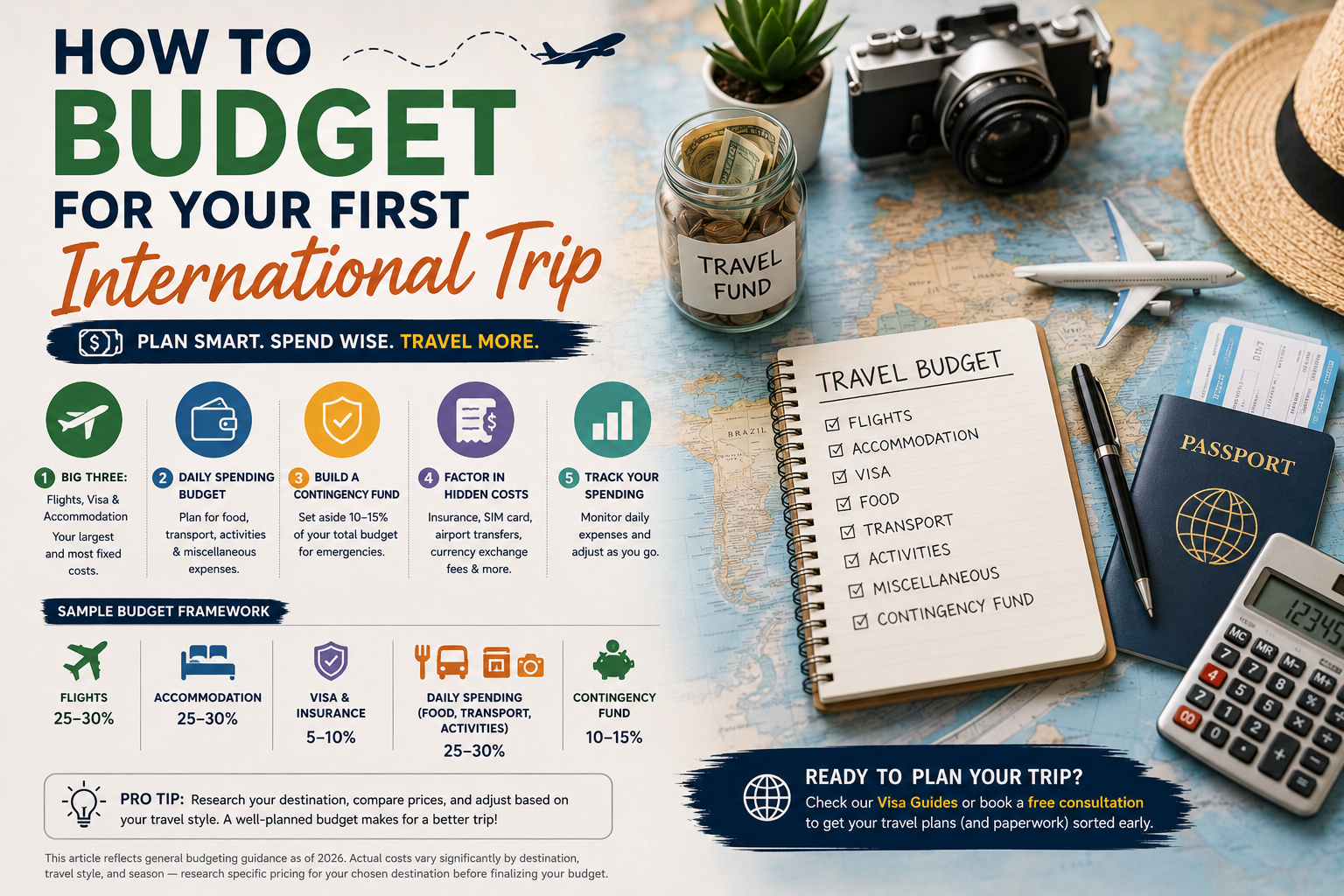
1. Start With the Big Three: Flights, Visa, and Accommodation
These are usually your largest and most fixed costs, so nail these down first before budgeting anything else.
- Flights — Book 2–3 months ahead for the best fares on most routes; prices spike closer to departure and during peak seasons (December holidays, summer).
- Visa fees — Don’t forget this is a real cost, separate from any assistance/service fees. Government visa fees vary widely by destination, and some require proof of funds that effectively “lock” a portion of your budget during the application process.
- Accommodation — Decide your comfort level early (hostel vs. mid-range hotel vs. Airbnb) since this affects your daily budget more than almost anything else.
2. Estimate a Daily Spending Budget
Once your fixed costs are set, calculate a rough daily amount for:
- Food — Street food and local eateries vs. restaurants can make a 3-4x difference in daily food costs
- Local transport — Public transit, ride-hailing apps, or day passes
- Activities and entrance fees — Museums, tours, attractions
- Miscellaneous — Souvenirs, unexpected small expenses, tips (research whether tipping is customary at your destination)
A simple approach: research your destination’s average daily cost online (many travel blogs and forums publish this per city), then add a 15-20% buffer for the “I didn’t expect that” expenses.
3. Always Build in a Contingency Fund
Set aside at least 10-15% of your total budget for emergencies — a missed connection, sudden illness, lost item, or simply wanting to extend your trip by a day. This isn’t optional; treat it as a fixed line item in your budget, not an afterthought.
4. Factor in Costs People Forget
- Travel insurance — Often required for visa applications anyway, but budget for it even if it’s not mandatory for your destination.
- SIM card or international roaming — Can add up if you’re not careful; research local SIM options versus your home carrier’s roaming rates.
- Airport transfers — Getting from the airport to your accommodation, both ways, at both ends of your trip.
- Currency exchange fees — Exchanging money at the airport is usually the worst rate; compare banks, exchange counters, and your card’s foreign transaction fees beforehand.
5. Track Spending as You Go
Use a simple notes app or budgeting app to log expenses daily while traveling. It’s much easier to adjust mid-trip (cut back on the last few days) than to realize afterward you overspent by 40%.